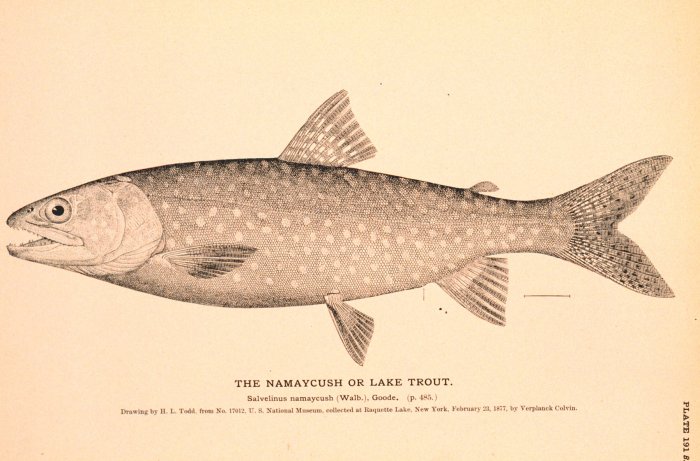
Biology & Profile
As a prominent member of the Salmonidae family, the Lake Trout provides excellent sport in US lake waters. The lake trout is the largest of the North American chars and a cold-water specialist found in the deep, oligotrophic lakes of the northern US and Canada. Lake trout require very cold, well-oxygenated water and are indicators of pristine lake quality. They grow slowly but can reach enormous sizes in suitable habitat.
Habitat & Diet
The ideal habitat for Lake Trout typically consists of Restricted to cold, deep, clear lakes. In summer, moves to depths of 50-300 feet to stay in water below 55°F. Comes shallow in spring and fall..
Primary Diet: Primarily piscivorous — eats ciscoes, smelt, alewives, and other deepwater fish. Also eats invertebrates.
Fishing Tips & Best Baits
Deep jigging with heavy spoons or tube jigs on 150-300 foot drops in summer. Trolling deep with diving planers and large spoons. Ice fishing with tip-ups over deep structure in winter. Spring and fall find fish in shallow water (10-30 ft) near points and rocky reefs.
Top Baits/Lures: Large tube jigs, heavy spoons (Swedish Pimple), trolling spoons, live ciscoes, large swimbaits
Best Seasons: spring,fall,winter